Knocking in a new bat is the most tedious thing in cricket gear ownership and nobody ever tells you that. It is also the single most useful thing you can do for a new blade, and doing it properly takes far longer than the two minutes of hitting most people put in.
Which raises the obvious question. You are going to be hitting a bat with a mallet for several hours. What do you listen to?
Before the answer, one warning, because getting it wrong actually damages the bat. You are listening for the sound of the blade. A crack, a dull thud instead of a ring, a change in how the edges sound when you work them. If you are listening to music at a level where you cannot hear your own bat, you are working blind, and the whole point of knocking a bat in is that the bat is telling you what it is doing.
Listen to Cricket's Greatest for Free —
Keep your first audiobook forever.
Start a 30-day Audible trial and download biographies of Kohli, Warne, Tendulkar, or elite sports psychology books.
So keep the volume low, keep it in one ear if you have to, and run the session in two halves. The list below is built around that structure. Every title was checked against Audible’s catalogue before publishing.
The facts
| Audiobook | Who it is for | Length | Read by |
|---|---|---|---|
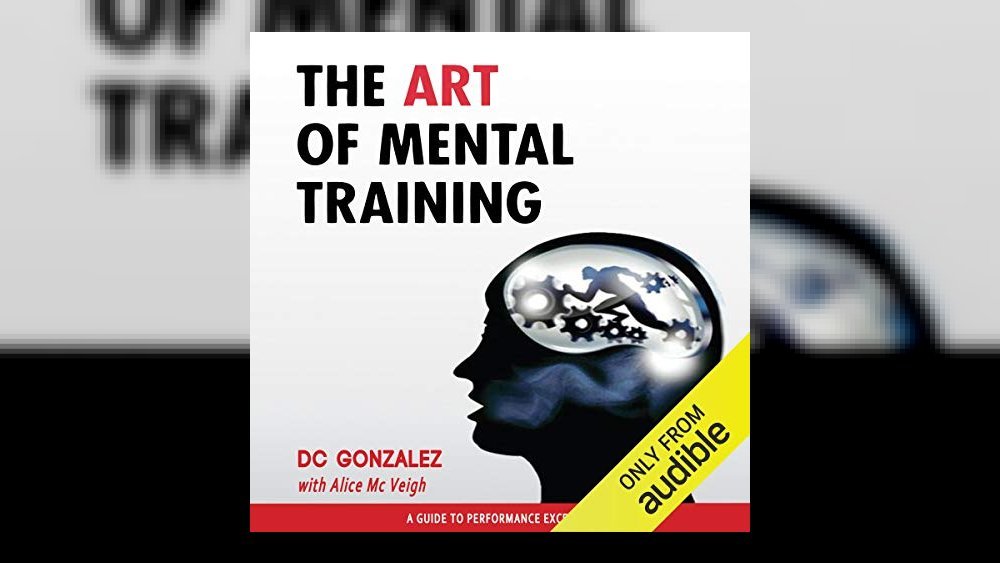
| The Art of Mental Training D. C. Gonzalez | The three-hour session, and the closest fit to one | 2 hr 57 min | D. C. Gonzalez |
| The Mindful Athlete Audio Companion George Mumford | Shorter sessions, and a book you can restart easily | 1 hr 50 min | George Mumford |
| The Grade Cricketer Sam Perry and Ian Higgins | The long session, when you have four hours to kill | 3 hr 47 min | Sam Perry and Ian Higgins |
| The Inner Game of Tennis W. Timothy Gallwey and Pete Carroll – introduction | When you want something serious but still under five hours | 4 hr 36 min | Dan Woren |
| Atomic Habits James Clear | When the session is long and the work is repetitive | 5 hr 35 min | James Clear |
| The Edges & Sledges Cricket Podcast Edges & Sledges | Free, and good for the final hour when your hands are tired | Podcast | Free to listen |
| The Final Word Cricket Podcast Adam Collins Geoff Lemon | Free, and the one to argue with | Podcast | Free to listen |
What it covers
The Art of Mental Training

This is the answer to the three-hour version of the question. The Art of Mental Training runs to two hours and fifty-seven minutes, which means it finishes almost exactly as a knocking-in session does, and you can play it from the first strike to the last without touching anything.
Gonzalez is a performance coach and the book is a training manual rather than an argument, which is why it works as background to repetitive work. You do not have to hold the whole thread to get value from it. The chapters on focus and on the days it goes wrong are the ones that arrive while your hands are busy.
He reads it himself. It is also the shortest serious title on this list, so it is the one to buy first if you only want one.
Read by D. C. Gonzalez · GonzoLane Media. Listen on Audible
nnThe Mindful Athlete Audio Companion

The Mindful Athlete Audio Companion is one hour and fifty minutes, which is a better match for a session when you are doing one evening’s work rather than a full Saturday. Mumford narrates it himself.
The reason it suits this particular job is that it needs almost no sustained attention. Most of it is breath work and noticing what your attention is doing, which is compatible with hitting a bat with a mallet at a low volume in one ear.
If your knocking-in is done in short bursts rather than long sessions, this is the one to use. The track lengths are short enough that you can start wherever you left off.
Read by George Mumford · BetterListen. Listen on Audible
nnThe Grade Cricketer
The Grade Cricketer is three hours and forty-seven minutes, which runs past a three-hour session but will carry you through a longer one, such as a full day of knocking in a new blade. Sam Perry and Ian Higgins read it themselves.
It is a comedy about Australian club cricket and it is funnier the more tired you are, which is exactly the use case. There is a section on the boredom of cricket that any person who has spent a day doing repetitive work will recognise.
Because it is written in short episodes, you can stop it mid-scene and pick it up again without losing the thread, which matters when you are working to a rhythm.
Read by Sam Perry and Ian Higgins · Wavesound from W. F. Howes Ltd. Listen on Audible
nnThe Inner Game of Tennis
The Inner Game of Tennis is four hours and thirty-six minutes and it is the book most likely to be worth your attention while you work. Gallwey’s subject is the difference between the instruction you give yourself and the one you meant to, which is precisely the thing you want to be thinking about while you perform a repetitive physical task hundreds of times.
That is the argument for it. Knocking in is practice without feedback, which is the worst kind of practice. A book about where attention goes during a repeated movement is more useful here than it is in most other settings.
Read by Dan Woren, in the 50th anniversary edition with a foreword by Pete Carroll.
Read by Dan Woren · Random House Audio. Listen on Audible
nnAtomic Habits
Atomic Habits runs to five hours and thirty-five minutes and is the longest book here, which makes it a choice for a full day of work rather than an evening. James Clear reads it himself.
The reason it fits this particular job is not the habit argument, though that is fine. It is that the book is structured in short, self-contained sections with a consistent format, which survives being played in pieces over several sessions.
If you have read it already, skip it and take something else. Otherwise it is a reasonable way to get through a long afternoon of hitting a bat with a mallet.
Read by James Clear · Penguin Audio. Listen on Audible
nnThe Edges & Sledges Cricket Podcast
The Edges & Sledges podcast is free to listen to on Audible and it is focused on Indian cricket and the IPL, hosted by three hardcore cricket fans. Episodes run around an hour, which is a good length for the last stretch of a session.
Free podcasts are the sensible choice for this job because there is nothing to skip and nothing to pause. You put it on and it fills the time while you work.
It is analysis rather than motivation, which is the right register for a session where the motivation is already taken care of by the fact that you have committed to three hours.
Hosted by Edges & Sledges. Listen on Audible
nnThe Final Word Cricket Podcast
The Final Word Cricket Podcast is hosted by Geoff Lemon and Adam Collins, and its own description calls itself a friendly guide to the world’s strangest sport. The tone is irreverent, the analysis is not.
Where the other free option is analysis for your own enjoyment, this one argues with you, which is more engaging if you are the sort of person who likes having opinions about cricket.
Free, episodic, and the right length for the end of a session when you want something that gets you talking on the way home.
Hosted by Adam Collins Geoff Lemon. Listen on Audible
nnWho it is for, and who it is not
This is for anyone who has just bought a new willow and is dreading the evening of knocking it in. It is also for the club player who has a bucket of old balls and a Saturday morning with nothing else in it.
If your bat has arrived and you are not sure how it should be done, start with the method section below and ignore the books until the bat is done. The order matters: a badly knocked-in bat is worse than an unknocked-in one, because it will have damaged edges that never recover.
How to get the most from it
Knock it in properly first, and only then decide what to listen to. The method below takes about ten minutes to read and it will save you from the most common way people ruin a new bat, which is hitting the middle too hard and too early and never working the edges.
Keep the volume low enough to hear the blade. Not low enough that you cannot hear the words, but low enough that a change in the sound would still reach you. If your audio device does not have a volume cap, use one.
Do the edges first, while you are fresh and while the blade is still true. The toe and the shoulder are where a bat cracks, and the edges are where you learn what the wood is doing.
Split the session. Three hours in one go on a new blade is a good way to overwork it. Two sessions with a day between them will get you further.
- Start on the edges with the bat on its edge on a hard surface, working from the toe up, using the face of the bat rather than the edge to strike it.
- Move to the face, using a cricket ball or a wooden mallet, and work from the middle of the face outward so the toe and the shoulder are not taking the first punishment.
- Rotate the bat a quarter turn after every few strikes so the work spreads across the blade rather than concentrating in one place.
- Listen for the change in sound. A blade that goes from a dull thud to a clear ring has come properly in, and that transition is the whole objective.
- Stop before you overwork it. Two good sessions beat one destructive one, and a bat with a cracked edge will not come good.
- Finish with a light pass on the edges and oil the toe. The toe is where the moisture gets in.
What knocking in actually is
A new willow blade is not finished. The fibres inside it are compressed and the glue lines are not fully cured, which is why a new bat behaves differently from one that has been used for a season. Knocking in is the process of gradually working those fibres and glues together so the blade behaves as one piece instead of several.
The reason it takes hours is that it has to be done gradually. The damage people do is almost always the same: hitting the middle of the bat hard with a bat or a cricket ball in the first ten minutes, which puts a shock through the middle of the blade that the edges have not been prepared for. Bat makers have known this for a long time, which is why good bats come with a knock-in recommendation and why experienced players use a mallet rather than a bat.
The sound is the feedback. A blade that is properly worked gives a clear ring when struck. A blade that is still loose gives a dead thud. A small crack gives a different sound again, and it is the reason to keep the volume low. You are listening to the bat for a reason.
Common questions
How long should it take to knock in a new cricket bat?
It depends on the bat, the willow grade and how hard you work, but the manufacturer recommendation on the bat is the number to use, and it is usually between 20 and 40 hours of hitting. Treat that as a floor rather than a target. Working it in over several sessions with a day or more between them is better than doing it in one long session, because the fibres need time to settle.
Can I listen to music while I knock in a bat?
You can, and you should keep the volume low. The work is largely repetitive and audio makes the time pass, which is the point of this page. What you should not do is play it loud enough that you cannot hear the blade. The sound of the bat is how you know whether the knock-in is working, and you cannot hear a change in tone through a song.
What should I actually do to a new bat?
Work the edges first with the bat on its edge on a hard surface, striking it with the face of the bat from the toe upward. Then move to the face with a cricket ball or a wooden mallet, working from the middle outward so the toe and the shoulder do not take the first punishment. Rotate the bat regularly so the work spreads across the blade, and stop when the sound goes from a dull thud to a clear ring.
Is there a three-hour audiobook that fits a knocking-in session exactly?
The Art of Mental Training, at two hours and fifty-seven minutes, which finishes almost exactly as the session does. It is a performance manual with short sections, so it does not matter if you miss a passage, and it is read by the author. If your session is shorter, The Mindful Athlete Audio Companion is one hour and fifty minutes and works in short pieces. If it is longer, The Grade Cricketer runs to three hours and forty-seven minutes and is funny enough to carry the last stretch.
Will knocking a bat in make it play better?
Yes, and this is the one thing on this site where the physics is not in dispute. A properly knocked-in blade behaves more predictably off the bat and is less likely to crack in the middle of the shoulder. A badly knocked-in bat is genuinely dangerous, because the edges are unprepared for the shock. If you only take one thing from this page, take the method rather than the playlist.
Written by the CricketGearGuru editorial team. Every title above was checked against Audible’s own catalogue on the day this page was published, so the narrator, the running time and the edition are the current ones. The links are affiliate links, so we may earn a commission if you buy through them at no extra cost to you.