The opening batter gets the least glamorous job in cricket and the shortest amount of time to do it. New ball, hard light, a field with a slip cordon in it, and a captain who wants quick runs rather than a patient 200. Every other batter in the side gets to settle in. You do not.
There is no shortage of cricket books aimed at openers. There is a shortage of good ones. Most spend four hours on childhood and twenty minutes on the innings that mattered. The picks below do the opposite. They spend their time on shot construction, on what happens between deliveries, and on how to keep a clear head while the field is attacking you.
Every title was checked against Audible’s catalogue before this page was published, so the narrators, runtimes and editions below are the current ones. The links point at the exact product rather than a search page.
Listen to Cricket's Greatest for Free —
Keep your first audiobook forever.
Start a 30-day Audible trial and download biographies of Kohli, Warne, Tendulkar, or elite sports psychology books.
The facts
| Audiobook | Who it is for | Length | Read by |
|---|---|---|---|
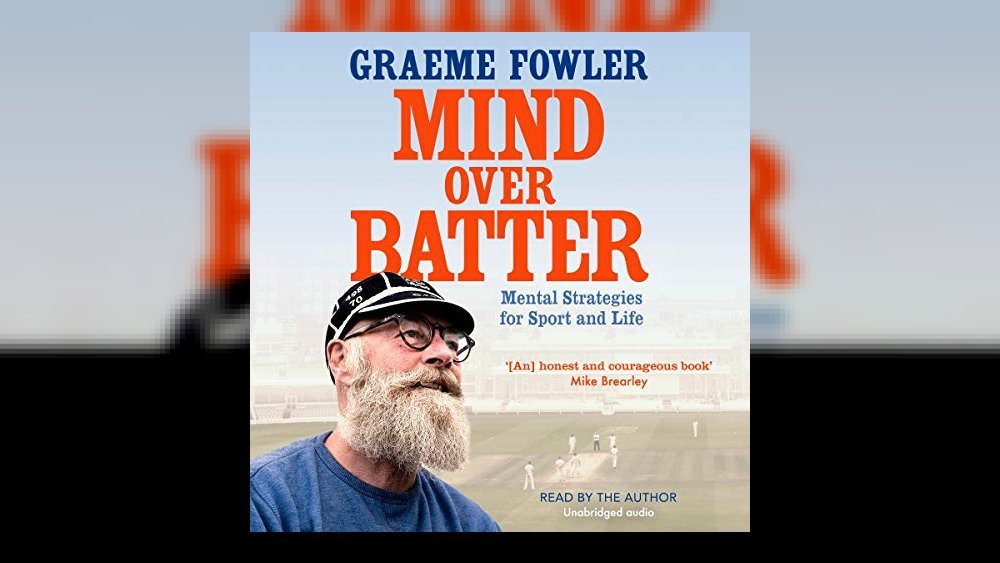
| Mind Over Batter Graeme Fowler | Batters who get into the contest mentally rather than technically | 9 hr 23 min | Graeme Fowler |
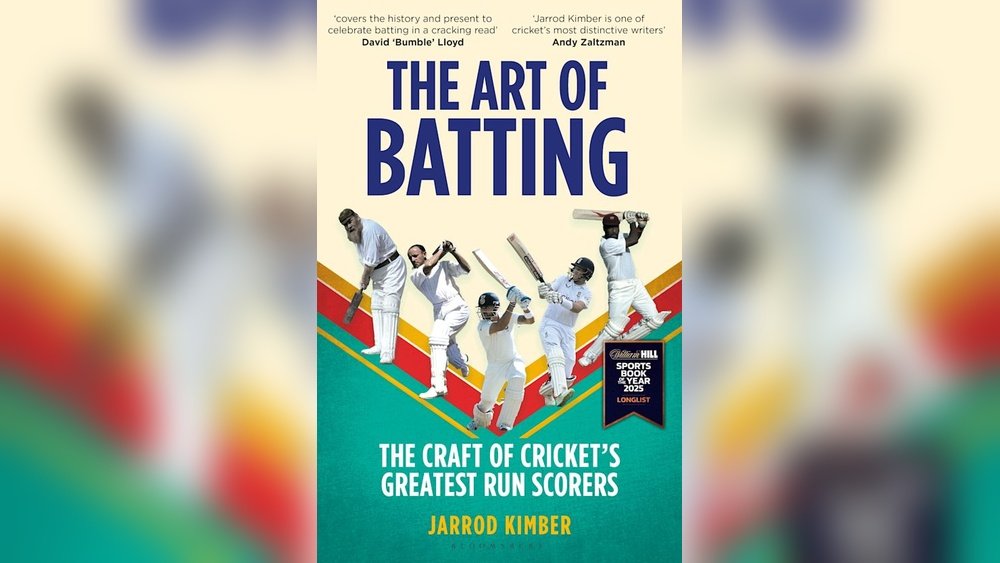
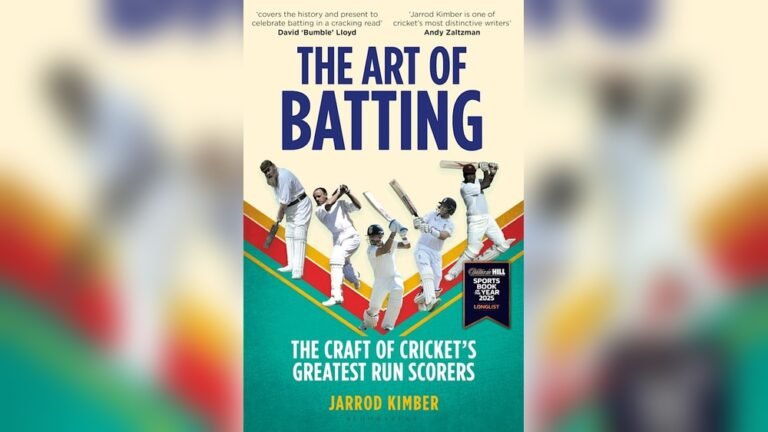
| The Art of Batting Jarrod Kimber | Openers who want to understand how a great innings is actually built | 10 hr 10 min | Jarrod Kimber |
| The Inner Game of Tennis W. Timothy Gallwey and Pete Carroll – introduction | Anyone whose inner voice turns a good innings into a scrappy one | 4 hr 36 min | Dan Woren |
| The Captain Class Sam Walker | Openers who need to read the game their captain is setting up | 9 hr 24 min | Keith Szarabajka |
| Performing Under Pressure Hendrie Weisinger and J. P. Pawliw-Fry | Anyone who has scored well in practice and badly in matches | 11 hrs | Michael Butler Murray |
| The Fighter's Mind Sam Sheridan | Openers who want to see how pressure is handled outside cricket | 8 hr 53 min | Nicholas Techosky |
| Grit Angela Duckworth | Players whose talent gets them selected but whose selection is not made | 9 hr 22 min | Angela Duckworth |
| The Art of Mental Training D. C. Gonzalez | Players who want a short, practical session rather than a thesis | 2 hr 57 min | D. C. Gonzalez |
| Bounce Matthew Syed | Anyone who thinks a good innings is a talent rather than a construction | 7 hr 50 min | James Clamp |
What it covers
Mind Over Batter

Graeme Fowler played first-class cricket and then spent years working out why the best batters were different from everyone else. Mind Over Batter is the follow-up to Absolutely Foxed, and it is the more technical of the two in psychological terms: how attention behaves in the middle of an innings, and what happens when the mind starts auditing every shot.
The chapter on being in the zone matters most for an opener. The zone is described less as a mood than as a set of conditions, and the conditions are describable in ways you can practise. A settled routine between deliveries. A physical rhythm that does not change after a bad ball. A willingness to leave the same delivery alone twice.
Fowler writes plainly about failure, including his own, and does not pretend that concentration is a personality trait you either have or have not. For someone opening the bat and getting out early, that framing is more useful than any motivational one.
Read by Graeme Fowler · Simon & Schuster Audio UK. Listen on Audible
nnThe Art of Batting

Jarrod Kimber has spent two decades studying footage of the best batsmen in the world. The Art of Batting is what came out of it, and it is not a manual of shots. It is a study of shot construction: why a batter takes the risk they take, what the field is doing that makes the risk necessary, and how a good player decides between them.
For an opener the most useful part is the patience argument. Kimber makes the case that an aggressive shot early in an innings is often the only shot on offer, because a captain who has taken a wicket or set a trap has given options away elsewhere. Understanding that you are being forced to attack makes the risk feel less like recklessness and more like arithmetic.
Kimber reads it himself, and it repays a second pass, which is a good sign for an audio edition you can stop and come back to.
Read by Jarrod Kimber · Bloomsbury Sport. Listen on Audible
nnThe Inner Game of Tennis
Gallwey wrote this in 1974 and it has not gone stale, because the problem it describes is not tennis. It is the difference between the instruction you give yourself while you are performing and the instruction that is supposed to be happening. Most batters spend their innings being told by an internal commentator to do the thing they are already trying to do, and then wondering why nothing changes.
The two ideas that travel best to cricket are letting it happen and self-talk. Letting it happen is about giving up the instruction to hit the ball well and simply allowing the movement you have trained to happen. Self-talk is about replacing the vague internal noise with two or three concrete cues, which is far more useful than the fifty quiet thoughts that replace them.
It is also one of the shorter books on this list, at four hours and thirty-six minutes, which makes it the one most people will actually finish.
Read by Dan Woren · Random House Audio. Listen on Audible
nnThe Captain Class
Sam Walker built this book around a group of captains who kept winning: Tiger Woods, Derek Jeter, Serena Williams, and a handful of others. His argument is that the successful ones shared habits rather than styles, and that the habits are learnable, which is more than most leadership books offer.
For an opener the connection is specific and slightly unglamorous. The powerplay is a captain’s decision. Where the field sits, how many slips are out, whether the second slip is there at all, is a captain telling you how much risk he is prepared to take. A book about reading the person who set the field is a book about reading the field.
The chapter on adaptation is worth the cover price on its own. Careers tend to end not because a player stopped being good, but because the game changed and the player did not.
Read by Keith Szarabajka · Random House Audio. Listen on Audible
nnPerforming Under Pressure
This is the only book on the list that is explicitly about the gap between how you perform when it does not count and how you perform when it does. The authors are performance psychologists, and the argument is that pressure does not make you worse by adding stress. It makes you worse by changing what you attend to.
That has a practical consequence for an opener. If pressure narrows attention onto the outcome, the fix is not to think about the outcome more. It is to give the attention somewhere else to go: the shape of the crease, the plan for the first two balls, the number of runners. There is a chapter on exactly this and it is worth listening to twice on its own.
At eleven hours it is the longest title here, so treat it as a two-sitting book rather than something to start on a Tuesday.
Read by Michael Butler Murray · Random House Audio. Listen on Audible
nnThe Fighter's Mind
Sam Sheridan set out to find out how people stay calm when the stakes are highest, and he went looking in boxing, mixed martial arts and special forces rather than in sport psychology. The interviews are the value. Athletes talk about the moment before they go out, and they describe it in more specific detail than any coaching manual does.
Several of those descriptions map straight onto cricket. There is a consistent account of a preparatory routine that is not about confidence but about sequencing, and a consistent account of what happens when that routine breaks, which is usually the real danger rather than the pressure itself.
It is a wide-ranging book, so read it with a purpose rather than as a course. The chapters on preparation and on recovery after a contest are the ones that matter for a batter.
Read by Nicholas Techosky · Audible Studios. Listen on Audible
nnGrit

Duckworth’s central claim is unglamorous and useful: sustained effort over months predicts who completes something difficult better than talent does. She supports it with research on West Point cadets, where grit predicted who would complete the programme better than class rank, physical aptitude or entrance scores.
For an opener the practical version is unglamorous too. The grind of cricket is not the big innings, it is the fourth month of a season when nothing is going well. Grit is the word for the thing that keeps a player training through that, and Duckworth is careful to describe it as a pattern of behaviour rather than a personality type.
Read by the author. The first couple of hours carry the argument and the rest is case studies, so it is a good one to start and abandon halfway if the season is busy.
Read by Angela Duckworth · Simon & Schuster Audio. Listen on Audible
nnThe Art of Mental Training
At just under three hours this is the shortest title here, and it is the one you can finish in a single sitting. Gonzalez is a performance coach, and the book is a training manual rather than an argument, which makes it the opposite of everything else on this list.
The structure is simple. A chapter on preparation, a chapter on focus, a chapter on the days it goes wrong, and a set of drills. Nothing in it is specific to cricket, which is either its weakness or its usefulness depending on how much you want a book to speak your language.
It is also the closest fit to a three-hour block, which is roughly how long the mental part of a practice session is.
Read by D. C. Gonzalez · GonzoLane Media. Listen on Audible
nnBounce
Syed is a former table tennis champion who moved into journalism, and he uses that background to argue that success is explained mostly by how much purposeful practice people get, how they are taught, and how much luck they have along the way.
Two ideas travel well to cricket. The first is that practice quality beats practice quantity, which is a pointed comment for anyone doing hours of shadow batting without feedback. The second is that the environment you are in shapes your ceiling more than your talent does, which is worth considering before you blame yourself for a hard season.
It reads more like popular psychology than sports science, and it is the lightest read of the nine, but it is also the one most likely to change what you do on Tuesday.
Read by James Clamp · Harper. Listen on Audible
nnWho it is for, and who it is not
This list is for a batter who opens. If you bat at four, most of it still applies, but the first two titles lean on the specific pressures of the opening pair: the new ball, the field, and the fact that nobody can yet tell whether you will be a run scorer or a partner.
It is also for a coach who has run out of technical things to say. There is a limit to how many ways you can tell a nineteen-year-old to watch the ball. These books are for the conversation after that, about what an innings feels like from the inside.
How to get the most from it
Start with one, not nine. The failure mode with a list like this is treating it as a queue of books to clear. Pick the one that describes a problem you actually have, listen to it properly, and then decide whether the next one is worth your time.
Listen in the gap between sessions, not instead of them. The value here is in the mental side, which is the part that gets squeezed out when a batter is tired. An hour in a car on the way to the ground is worth more than a chapter in a coaching session, because it arrives before you need it.
Take one idea per listen and write it down. A notebook or a phone voice memo is enough. The books here are full of ideas that sound good and evaporate unless you write them down and then try them.
If you want the evidence behind the format before you commit to a subscription, <a href="https://cricketgearguru.com/why-every-cricketer-should-listen-to-audiobooks-the-science-of-audio-learning-for-athletes/">Why Every Cricketer Should Listen to Audiobooks</a> sets out what the research actually says about listening versus reading, including where listening loses to reading.
- Pick one problem, not one book: name the thing you want to be different on Saturday, then choose the title that addresses it.
- Listen in a fixed slot: the same twenty minutes on the same journey, so the habit attaches to something you already do.
- Write down one thing per listen: if you cannot state it in a sentence, you have not understood it yet.
- Test it in one session before adopting it: one idea, one session, then decide whether it earned a place.
- Revisit rather than replace: a second pass on a book you have already finished beats a new title every fortnight.
Common questions
Will listening to an audiobook actually improve my batting technique?
No, and any list that tells you otherwise is selling something. You cannot change a physical skill by listening to a description of it. What audio can do for a batter is train attention, routine and the management of a bad shot, all of which sit upstream of technique. If your problem is that you cannot stop playing the same shot, that is a coaching problem. If your problem is that you cannot stop thinking about the shot you just missed, that is what Mind Over Batter and The Inner Game of Tennis are for.
Which single audiobook should an opening batsman start with?
Mind Over Batter. It is written by a batter, it is about the innings itself rather than about a career, and it covers the part of opening the bat that nobody coaches properly, which is what your attention is doing while you are still finding your way. The Inner Game of Tennis is the better book and the better listen if you can only do one thing this month, because it is under five hours.
How long should I listen before I expect to see a difference?
Give any of these a full pass before you judge them, because the useful ideas in books like these are rarely the first thing said. In practice that means a fortnight of regular listening rather than one weekend. The change you are looking for is not a new shot, it is noticing that you have started a sequence of three identical balls, and that noticing tends to arrive somewhere in the second half of a book.
Are these useful for a club batter with no coaching?
Yes, with one caveat. A club batter will get more from The Art of Batting and The Grade Cricketer than from the mental side of the list, because both teach you to watch a game properly, and watching a game properly is the cheapest coaching available. The mental books assume you already understand your own game well enough to be curious about it.
Do I need an Audible subscription to get these?
Every title above is an Audible audiobook and every link includes our affiliate tag. Audible normally offers a 30-day free trial to new members, and Amazon Prime members can currently get two free audiobooks during that trial. If you are not sure whether audio suits you, the trial is the cheapest way to test it, and the free cricket podcasts linked elsewhere on this site are a zero-cost way to check whether you enjoy listening rather than reading.
Written by the CricketGearGuru editorial team. Every title above was checked against Audible’s own catalogue on the day this page was published, so the narrator, the running time and the edition are the current ones. The links are affiliate links, so we may earn a commission if you buy through them at no extra cost to you.