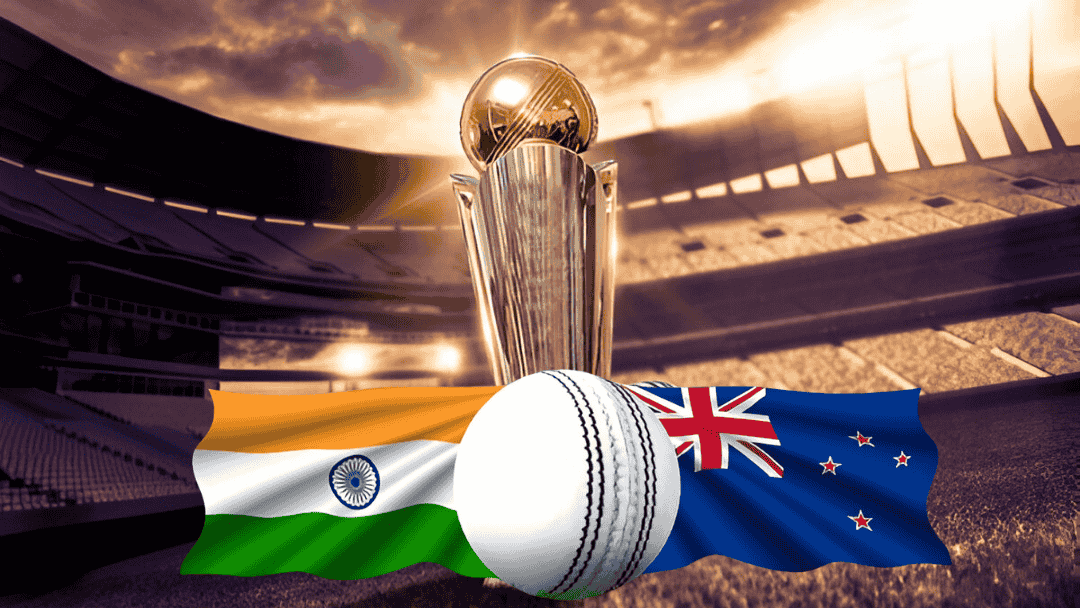
The ICC Champions Trophy 2025 concluded in dramatic fashion on March 9, 2025, as India defeated New Zealand by four wickets in a nerve-wracking final at Dubai International Cricket Stadium. With this victory, India became the most successful team in the tournament’s history, securing their third title (2002*, 2013, 2025) and surpassing Australia’s two wins. The match, attended by 25,000 fans—70% of whom were Indian supporters—showcased tactical brilliance, individual heroics, and the resurgence of 50-over cricket in the T20 era.
The Road to the ICC Champions Trophy Final: How Both Teams Earned Their Spot
India’s Dominant Campaign
India entered the tournament as favorites, dominating Group A with three consecutive wins:
- Feb 20: Defeated Bangladesh by 6 wickets (Dubai).
- Feb 23: Crushed Pakistan by 6 wickets (Dubai).
- Mar 2: Edged New Zealand by 44 runs (Dubai).
In the semi-finals, India faced a stern test against Australia. Chasing 265, Virat Kohli anchored the innings with an unbeaten 84* off 98 balls, while Shreyas Iyer (45) provided crucial support. India sealed the win with 11 balls to spare, advancing to their fifth Champions Trophy final.

New Zealand’s Gritty Journey
New Zealand, led by Mitchell Santner, finished second in Group A but peaked in the knockouts:
- Feb 19: Opened with a 60-run win over Pakistan (Karachi).
- Feb 24: Survived a scare against Bangladesh, winning by 5 wickets (Rawalpindi).
- Mar 5: Semi-final brilliance against South Africa: Rachin Ravindra (128) and Kane Williamson (117) powered a 50-run victory, posting 362/6—the highest total of the tournament.
ICC Champions Trophy 2025 Final: A Nerve-Wracking Showdown
New Zealand’s Innings: Controlled but Undercooked
Winning the toss, New Zealand opted to Your Complete Guide to Selecting the Perfect Cricket but struggled against India’s spin trio:
- Daryl Mitchell (63 off 78): Anchored the innings but fell to Kuldeep Yadav’s guile.
- Michael Bracewell (53* off 45): Accelerated late with 4 boundaries, lifting NZ to 251/7.
- Key Bowling: Kuldeep Yadav (2/38) and Varun Chakaravarthy (2/45) stifled the middle overs, exploiting Dubai’s slow pitch.
India’s Chase: Drama Until the Last Over
India’s reply was a rollercoaster:
- Rohit Sharma’s Captain’s Knock: Rohit Sharma’s 76 at the top of the order was instrumental in setting up India’s chase. His aggressive approach laid the foundation for their victory.
- Middle-Order Jitters: At 190/5, New Zealand’s Kyle Jamieson (2/47) threatened a collapse, but KL Rahul (34*) and Ravindra Jadeja (19*) held their nerve.
- Climactic Finish: Needing 7 off 12 balls, Jadeja smashed a boundary off William O’Rourke with 3 balls to spare, sparking euphoric celebrations.
Key Performances and Tournament Highlights
Player of the Tournament: Rachin Ravindra
The New Zealand all-rounder dominated with 263 runs (including a semi-final century) and 8 wickets, earning him the Player of the Series award.
India’s Bowling Depth
India’s spinners emerged as unsung heroes of the final. Their ability to control the middle overs and take crucial wickets prevented New Zealand from accelerating when needed.
The spinners’ success reflected India’s tactical awareness in preparing for Dubai’s conditions, where slower bowlers traditionally find assistance as matches progress. Their performance validated India’s selection strategy and reinforced their reputation as one of cricket’s most versatile bowling attacks.
- Spin Trio: Kuldeep Yadav, Varun Chakaravarthy, and Ravindra Jadeja combined for 24 wickets in the tournament, choking opponents on turning tracks.
- Mohammed Shami: One of the top wicket taker in ICC Champions trohpy 2025. Shami took 9 wickets, including 3/42 vs Australia in the semi-final.
New Zealand’s Consistency
Despite the loss, the Kiwis showcased their ICC tournament pedigree:
- Kane Williamson: 225 runs at 56.25, including a sublime 117 vs South Africa.
- Matt Henry: 10 wickets, including a five-wicket haul against India in the group stage.
Historical and Tactical Context
This victory carries significance beyond just adding another trophy to India’s cabinet. It represents a culmination of strategic planning, player development, and tactical evolution under the current leadership. The unbeaten campaign demonstrates a team at the peak of its powers, combining experience with youthful energy.
For New Zealand, despite the disappointment, reaching another ICC final reinforces their status as one of cricket’s most respected teams. Their continued excellence despite limited resources compared to larger cricketing nations remains one of the sport’s most admirable stories.
- Third Champions Trophy Title: Surpassing Australia’s two wins, India now holds the record for most titles (2002*, 2013, 2025).
- Hybrid Hosting Model: The tournament marked Pakistan’s return as a global host after 29 years, though India's ICC t20 World Cup Triumph held in Dubai due to political tensions—a first in ICC history.
- Afghanistan’s Debut: Their maiden Champions Trophy appearance highlighted cricket’s expanding global footprint.
Behind the Scenes: Logistics and Controversies
Venue Challenges
- Dubai’s Role: Hosted all India matches, including the final, due to security concerns. The stadium’s 25,000 capacity saw packed crowds, with 70% Indian supporters.
- Pakistan’s Comeback: Matches in Karachi, Lahore, and Rawalpindi proceeded smoothly, dispelling safety myths and reviving international cricket in the region.
Prize Money and Recognition
- $2.24 Million to India: A 53% increase from 2017, reflecting the tournament’s growing prestige.
- Umpiring Excellence: Richard Illingworth and Paul Reiffel officiated the final, praised for decisive DRS calls.
Conclusion: A Tournament of Redemption and Rivalry
The ICC Champions Trophy 2025 will be remembered for India’s tactical brilliance, New Zealand’s fighting spirit, and cricket’s return to Pakistan. For fans, the final was a microcosm of ODI cricket’s charm—strategic depth, individual heroics, and last-over theatrics.
From Rohit Sharma’s captain’s knock to the spinners’ masterclass and Ravindra Jadeja’s finishing touch, this was a victory built on collective excellence. As cricket moves forward, this final will stand as a mark to India’s depth of talent and strategic acumen.
As India lifts the trophy, questions linger: Can they dominate the ICC World Cup 2027? Will New Zealand shed their “bridesmaid” tag? One thing is certain—the Champions Trophy’s revival has reignited passion for 50-over cricket, proving its relevance in the T20 era.
Seeking more expert insights? Explore our comprehensive gear guide for reliable recommendations and practical tips to enhance your game.
The books that explain the tournament
Champions Trophy cricket is decided by a few players and a lot of structure. These are the books that unpack the structure – and every one is a verified listing on Audible.
| Title | Best for | Details | Price |
|---|---|---|---|
| Crickonomics Stefan Szymanski with Tim Wigmore | Why the professional game is shaped the way it is | Read by David Thorpe · Bloomsbury Sport | Listen |
| The Analyst Inside Cricket Simon Hughes | The professional game from inside the dressing room | Listen on Audible | Listen |
| The Art of Batting Jarrod Kimber | Technique from a player who coached Australia | Read by Jarrod Kimber · Bloomsbury Sport | Listen |
| The Art of Captaincy Mike Brearley with Ed Smith – introduction | What leadership in cricket actually involves | Read by Roger May · Macmillan Digital Audio | Listen |
The verdict
**Best for the tactics:** The Art of Batting.
**Best for the professional game:** The Analyst Inside Cricket.
**Best for the captaincy:** The Art of Captaincy, if the tournament interests you as much for the leadership as for the cricket.
Common questions
Which book explains Champions Trophy cricket best? The Analyst Inside Cricket, because Simon Hughes covers the short format and the players who shaped it across two decades.
Is Crickonomics about cricket or money? Both – it uses cricket as the case study for how the professional game is financed, and that is what makes it readable.
Do I need to have followed the tournament? No. The books explain the format and the players, and they are more useful read afterwards, when you want to know what you actually watched.
Are these audiobook links affiliate links? They are – we may earn a commission if you buy through them, at no extra cost to you.
Links above are affiliate links, so if you buy through them we may earn a commission. It does not change the price, and it does not change the recommendation.