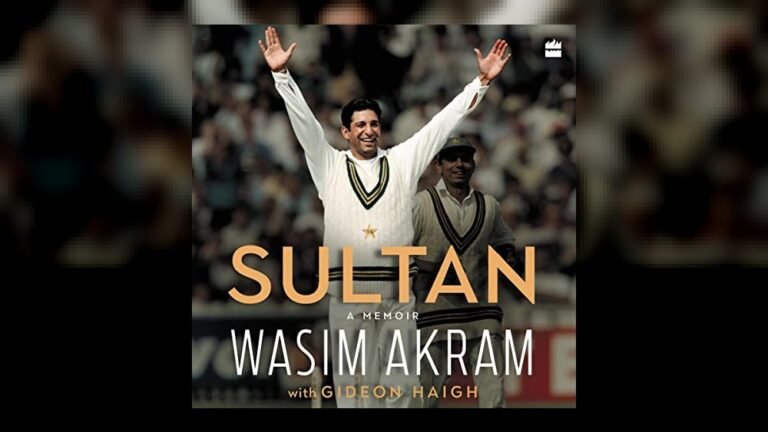
The biggest problem with giving a teenager a self-improvement book is that they can tell it is one. The pitch of most cricket motivation material, for adults or for juniors, is a version of grit and visualisation that a fourteen-year-old will identify and dismiss on contact.
What actually keeps a young player interested is more ordinary: a story about someone who started where they did, a book that explains how learning works, and the occasional one that is simply funny enough to be worth an hour of a long journey.
The list below is built on that basis. Every title was checked against Audible’s catalogue before publishing, so the runtimes and narrators are current, and every link goes to the exact product.
Listen to Cricket's Greatest for Free —
Keep your first audiobook forever.
Start a 30-day Audible trial and download biographies of Kohli, Warne, Tendulkar, or elite sports psychology books.
The facts
| Audiobook | Who it is for | Length | Read by |
|---|---|---|---|
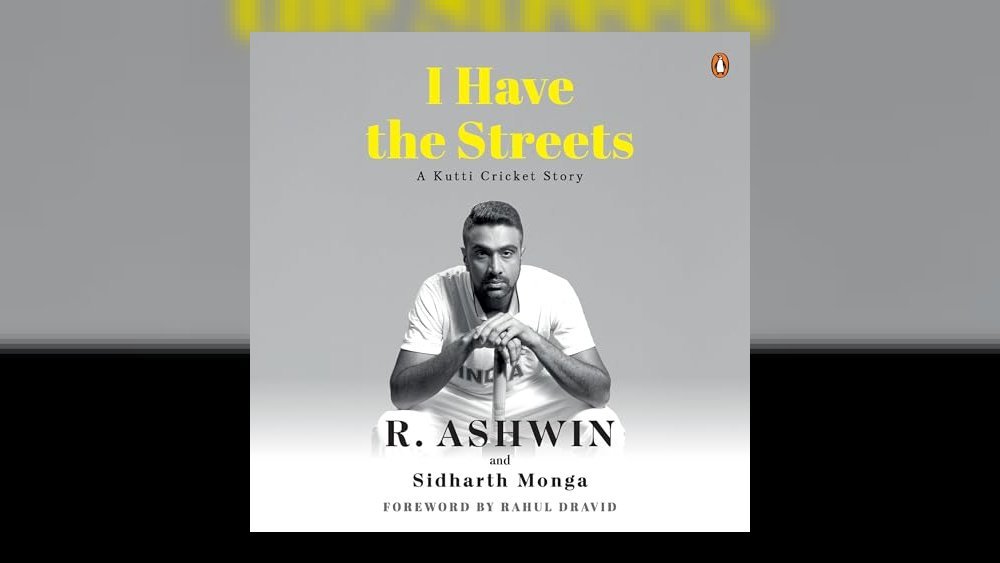
| I Have the Streets: A Kutty Cricket Story R. Ashwin and Sidarth Monga | Junior players who came from somewhere with no cricket tradition | 7 hr 5 min | Jeremy Francis |
| The Grade Cricketer Sam Perry and Ian Higgins | Anyone who would rather be entertained than lectured | 3 hr 47 min | Sam Perry and Ian Higgins |
| The Rules of Backyard Cricket Jock Serong | Teenagers who would rather have a story than a lesson | 9 hr 4 min | Rupert Degas |
| White Cap and Bails Dickie Bird and Mr H D Bird | Junior players who want to know what happens behind the scenes | 12 hr 26 min | Graham Roberts |
| The Art of Learning Josh Waitzkin | Players who want to understand how they are actually learning | 7 hr 55 min | Josh Waitzkin |
| Atomic Habits James Clear | Anyone whose training needs to become a routine they keep | 5 hr 35 min | James Clear |
| The Inner Game of Tennis W. Timothy Gallwey and Pete Carroll – introduction | Young players who overthink every shot they miss | 4 hr 36 min | Dan Woren |
| Six Machine Chris Gayle | Players who need to believe the big shots are available | 8 hr 41 min | Leroy Osei-Bonsu |
| The Champion's Mind Jim Afremow | Junior players who need a picture of what progress looks like | 7 hr 49 min | Eric Michael Summerer |
What it covers
I Have the Streets: A Kutty Cricket Story

R Ashwin learned to bowl on the streets of Madurai, in a household that did not follow cricket, and I Have the Streets is the story of how an entirely improvised education turned into an international career. He wrote it with Sidarth Monga and narrates it himself, and it came out in 2025.
The reason this is first on the list is that it is the only one of these books which begins where most junior players actually begin. No academy, no coaching fees, no indoor nets, just a lot of hours and a few older players who were willing to pass something on.
There is a particular value for a fifteen-year-old from a similar background, who may have been quietly told that cricket was not really for people like them. Ashwin does not make a speech about it. He just describes what he did.
Read by Jeremy Francis · Random House Audio. Listen on Audible
nnThe Grade Cricketer

The Grade Cricketer is a comedy show about Australian club cricket written by Sam Perry and Ian Higgins, and they read it themselves. Three hours and forty-seven minutes, published in 2025, and it is very funny.
There is a serious argument buried in it. The Grade Cricketer takes cricket seriously as a sport that people actually play, with all the ordinary chaos of that, and the affection in it is real rather than ironic. A young player who spends time with this comes out with a better feel for the texture of the game than from most coaching material.
This is the one to put on when the training gets tedious and the teenager has stopped listening to anything.
Read by Sam Perry and Ian Higgins · Wavesound from W. F. Howes Ltd. Listen on Audible
nnThe Rules of Backyard Cricket

The Rules of Backyard Cricket is a novel by Jock Serong about an Australian sporting star of the bad-boy variety who ends up, years later, in the boot of a car. It is cricket as a backdrop for a story about friendship and failure, and it is narrated by Rupert Degas.
For a teenage reader the appeal is straightforward. It is a book about a cricketer who is good at cricket and bad at everything else, which is more interesting than a book about a cricketer who is well-rounded.
Nine hours, so it is a project rather than a session. It is also the title on this list most likely to start a conversation about what cricket means to the people who play it.
Read by Rupert Degas · Wavesound from W. F. Howes Ltd. Listen on Audible
nnWhite Cap and Bails

Dickie Bird was an umpire for over fifty years and White Cap and Bails is the sequel to his autobiography, made of stories about county cricket clubs, the players he knew, and the decisions he had to make in front of a full ground.
There is a chapter that every cricketer reads differently depending on their age, about the moment a decision goes against you and what you do next. For a twelve-year-old it is a funny story. For a seventeen-year-old it is a description of the rest of their life.
Twelve and a half hours. It is long, but it is the kind of book you put on in a car and leave running.
Read by Graham Roberts · Hodder & Stoughton. Listen on Audible
nnThe Art of Learning
Josh Waitzkin won the US National Chess Championship at nine. The Art of Learning is his account of what produced that, and it is not the story people expect. The book is about deliberate practice, about how to study a hard skill properly, and about the trap of practising the version of a skill you can already do.
The idea most worth handing to a teenager is the separation of learning from performing. The two look the same from outside and they are completely different activities, and most young players spend months trying to get better at something by repeating what already works.
He reads it himself at close to eight hours. The chapter on study habits is the one that will change what a young player does at the nets.
Read by Josh Waitzkin · Tim Ferriss. Listen on Audible
nnAtomic Habits

Atomic Habits is over-recommended, so it is worth saying plainly what it is. James Clear argues that behaviour change comes from making the right action obvious, attractive, easy and satisfying in the environment, rather than from resolving to be better.
For a junior cricketer the argument is almost too perfect. A teenager who has to pack their kit, find their shoes and choose a bat in the dark is not going to train. A teenager whose kit is packed the night before and whose water bottle is by the door will.
Five hours and thirty-five minutes, read by the author. If they have already read it, skip it and give them The Art of Learning instead.
Read by James Clear · Penguin Audio. Listen on Audible
nnThe Inner Game of Tennis
The Inner Game of Tennis is the book every coach should have read before telling a fifteen-year-old to concentrate. Gallwey separates the instruction you give yourself while you are performing from the instruction you meant to give yourself, and shows how most players run both at once and get neither.
The part juniors need is the notion of two or three concrete cues instead of fifty vague thoughts. Watch the ball. Soft hands. Hold your shape. Everything else is noise, and the noise is what makes a teenager swing at a ball they should have left.
Under five hours, and it is short enough that a young player will actually finish it. The original 1974 text, in a 50th anniversary edition.
Read by Dan Woren · Random House Audio. Listen on Audible
nnSix Machine
Chris Gayle hit the first ball of his innings for six more times in international cricket than anyone else, and Six Machine is the story of why. Read by Leroy Osei-Bonsu for Penguin, it runs to eight hours and forty-one minutes.
It is written at a level of candour that professional books rarely reach. Gayle is frank about the volatility, the sponsor pressure, the crowd and the batting order, and the famous line about playing for the glory rather than the risk is only the surface of a much more careful argument about when to take the risk.
For a teenager it is a book about a player who decided early what he was for, and then had to live with the consequences. That is a more useful subject than technique.
Read by Leroy Osei-Bonsu · Penguin. Listen on Audible
nnThe Champion's Mind
The Champion’s Mind is Jim Afremow’s book on how competitive people think, train and recover, and it is written for a wider audience than the elite. Seven hours and forty-nine minutes, narrated by Eric Michael Summerer.
The chapters on what to do when you are not improving and on the difference between rest and laziness are the ones that land with a junior squad, because both are questions a fifteen-year-old will not ask out loud.
It is a broad book rather than a deep one, and it is useful as a companion rather than as a course.
Read by Eric Michael Summerer · Tantor Audio. Listen on Audible
nnWho it is for, and who it is not
This list is for cricketers aged roughly 12 to 18, and for the adults who have to keep them interested. The selection is deliberately weighted towards books that can be finished and enjoyed rather than books that are technically optimal, because a junior who finishes a book will listen to the next one.
The exception is The Art of Learning, which is included because a young player who understands how learning works gets a permanent advantage, and because it is the one book on this list a junior player can usefully read alongside a coach rather than instead of one.
How to get the most from it
Let the teenager choose from a shortlist of two or three. The whole point is that it gets listened to. Offer the list, let them pick, and then leave them alone for a fortnight.
Do not turn it into a lesson. If a young player finishes a book and reports back on what they learned, you have taught them that books are for reporting on, and the next one will not get finished.
Use the car. The most effective way to get a book into a young cricketer’s routine is as something to listen to on a journey, rather than as homework. There is no homework here.
Keep one out of reach for later. The books about learning, grit and the inner game will mean much more at eighteen than they do at thirteen, and there is no harm in saving them.
- Give a shortlist, not a list: three options and a fortnight is the deal.
- Let them pick the first one: a book chosen by a teenager is a book that gets finished.
- Never ask for a summary: the question is whether they finished it, not what they learned.
- Use it for the drive: audio beats homework at this age every time.
- Hold the good stuff back: save the learning books for when they are ready for them.
Common questions
What is the best audiobook for a young cricketer?
I Have the Streets, if they came from somewhere without a cricket background. R Ashwin narrates it himself and it tells the story of learning the game on Madurai streets with no coaching and no academy, which is a far more accurate picture of how most cricketers actually started. For a player who already has that, The Grade Cricketer is the one they will not put down.
Are self-help books good for young players?
Generally no. Most grit and mindset books are written for adults and are transparently aimed at people in a workplace. The two here that work for teenagers are the ones with a story in them rather than a framework, and the one that works as a tool rather than a story is The Art of Learning, which is about the mechanics of getting better and is genuinely interesting to a fourteen-year-old if you let them read it as a book about chess.
Can listening to a book actually make a young player better?
It can make them better at learning and more patient with the slow parts of the game, which are real effects. It will not add a shot or a kilo. The strongest single argument for audiobooks with a junior is that they can be finished in a car, and a book that gets finished changes a young player more than a better one that does not.
My child says they have no interest in books. What should I do?
Do not push the general category. Start with the things they already like. If they watch cricket, Chris Gayle’s Six Machine is funny, blunt and full of match situations they will recognise. If they like the game being funny, The Grade Cricketer is the safest bet on this list. If they like stories, The Rules of Backyard Cricket is a novel about a cricketer and takes nine hours to get through.
Should I read these with my child?
Not the whole thing, and not as a task. The exception is The Inner Game of Tennis, which is short enough to finish together and which gives you a shared vocabulary for talking about concentration. A football conversation about a book you have both read is worth more than any amount of asking how their training went.
Written by the CricketGearGuru editorial team. Every title above was checked against Audible’s own catalogue on the day this page was published, so the narrator, the running time and the edition are the current ones. The links are affiliate links, so we may earn a commission if you buy through them at no extra cost to you.