A coach runs out of technical things to say long before a season is out. The shot has been coached, the field has been set, the drill has been shown. What is left is the harder part: why the player is doing it, what the game looks like from the top, and what the club is actually trying to build.
That is where a good book does something a session plan cannot. It gives you ideas you did not have, in a language that belongs to someone else, which is much easier to pass on to a seventeen-year-old than your own phrasing.
The list below is for coaches at every level, from a club side with two under-15 teams to a first-class staff. Every title was checked against Audible’s catalogue before publishing, so the runtimes and narrators are current and every link goes to the exact product.
Listen to Cricket's Greatest for Free —
Keep your first audiobook forever.
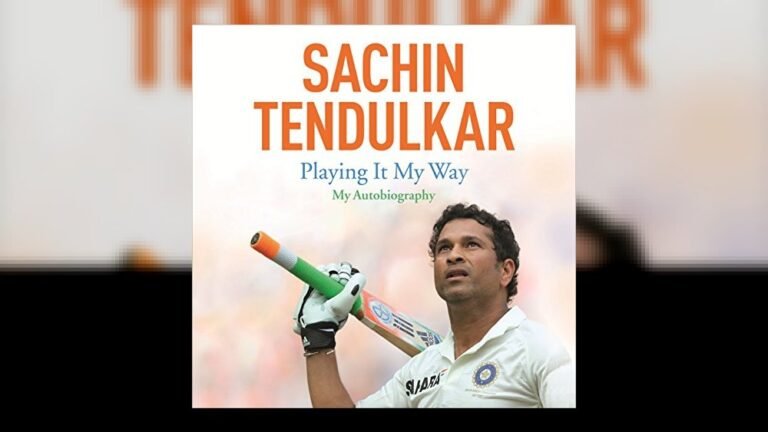
Start a 30-day Audible trial and download biographies of Kohli, Warne, Tendulkar, or elite sports psychology books.
The facts
| Audiobook | Who it is for | Length | Read by |
|---|---|---|---|
| The Art of Captaincy Mike Brearley and Ed Smith – introduction | Any coach who has to lead a group of people, not just a group of players | 13 hr 55 min | Roger May |
| The Art of Learning Josh Waitzkin | Any coach who is responsible for how players learn rather than what they are told | 7 hr 55 min | Josh Waitzkin |
| The Art of Batting Jarrod Kimber | Any coach who wants a technical vocabulary to teach with | 10 hr 10 min | Jarrod Kimber |
| Hitting Against the Spin Nathan Leamon and Ben Jones | Any coach who wants players to understand the game they are in | 9 hrs | Nathan Leamon |
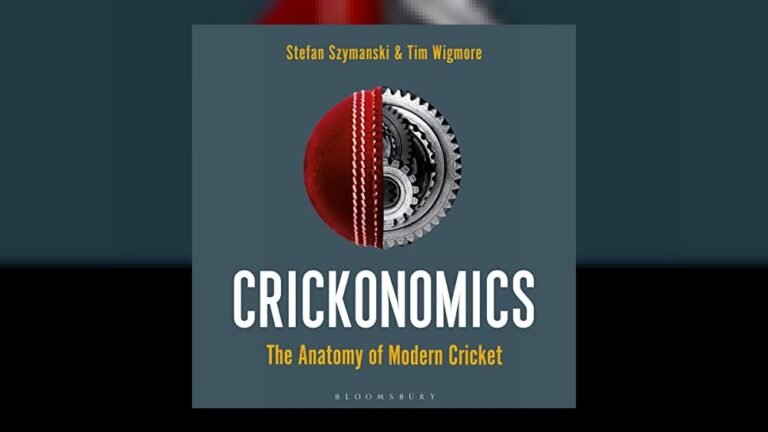
| Crickonomics Stefan Szymanski and Tim Wigmore | Any coach who needs to understand the industry their players are in | 13 hr 57 min | David Thorpe |
| Cricket 2.0 Tim Wigmore and Freddie Wilde | Any coach working in T20 or franchise cricket | 15 hr 33 min | Oliver J. Hembrough |
| The Mindful Athlete Audio Companion George Mumford | Any coach who wants one short thing they can use before every session | 1 hr 50 min | George Mumford |
| The Champion's Mind Jim Afremow | Any coach who wants to understand the player who is not improving | 7 hr 49 min | Eric Michael Summerer |
| White Cap and Bails Dickie Bird and Mr H D Bird | Any coach who wants to understand the rules and the people enforcing them | 12 hr 26 min | Graham Roberts |
What it covers
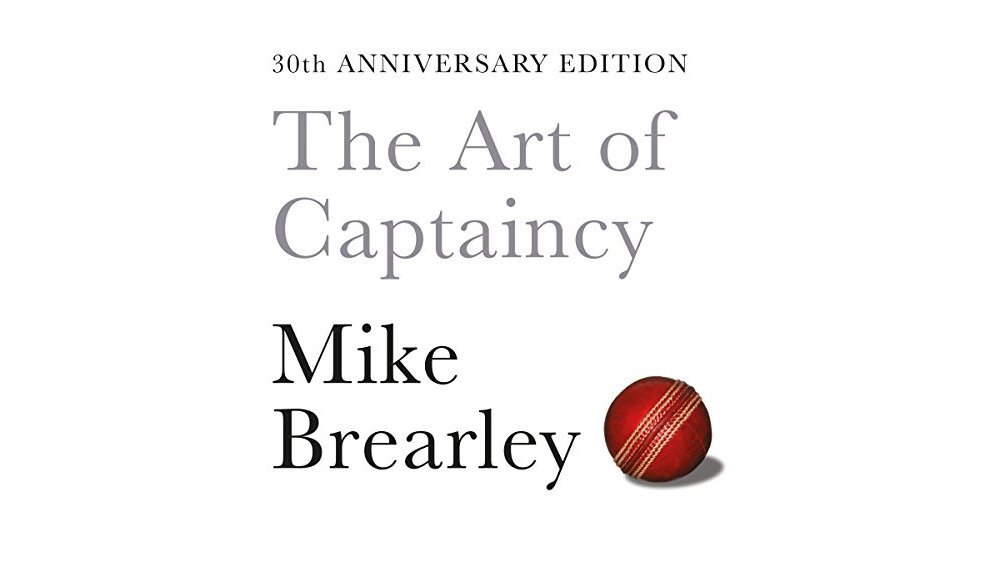
The Art of Captaincy

Mike Brearley captained England to the 1981 Ashes victory over Australia, and The Art of Captaincy is his study of what that actually involved. Mike Atherton has called it the best book on captaincy written by an expert, and after reading it that is not difficult to see why.
The argument is that captaincy is a craft rather than a personality. Brearley treats the decisions the way a coach would treat a delivery: what the options were, what he chose, what it cost, and what he would do differently. That is an unusually useful thing to have in your head when you are picking a side or deciding how to spend the last session of a tour.
Thirteen hours and fifty-five minutes, narrated by Roger May. It is long and it is the one on this list most worth the length.
Read by Roger May · Macmillan Digital Audio. Listen on Audible
nnThe Art of Learning

Josh Waitzkin won the US National Chess Championship at nine and The Art of Learning is his account of what produced that. Read by the author, just under eight hours.
For a coach this is the most directly applicable book in the list, because the subject is how a hard skill is acquired and why most practice is wasted. Waitzkin separates learning from performing, and argues that confusing the two is how a player spends a season repeating what they can already do.
There is a practical consequence for a coach: what you put in a session is not automatically what the player is learning from. The chapter on study is the one to read before you plan a pre-season.
Read by Josh Waitzkin · Tim Ferriss. Listen on Audible
nnThe Art of Batting

Jarrod Kimber’s The Art of Batting was a nominee for the William Hill Sports Book of the Year in 2025, and it gives a coach something that is very hard to get from a coaching manual: a way of talking about shot construction that a player can follow.
The book is built on the decisions elite batters make rather than on the shots themselves. That is a coaching-shaped book, because it gives you the language of choice rather than the language of instruction.
Ten hours and ten minutes, read by Kimber himself. It will also make you a much better teacher of why, which is the part players are usually missing.
Read by Jarrod Kimber · Bloomsbury Sport. Listen on Audible
nnHitting Against the Spin
Hitting Against the Spin by Nathan Leamon and Ben Jones is nine hours long and explains what the ball does and why the outcomes people call luck are more predictable than they look. The Times chose it as a best sports book of 2021.
For a coach it is a book about the difference between a result and a decision, which is the whole argument of why technical work matters. A player who understands the mechanism stops needing to be told what happened and starts being able to ask what to do about it.
Leamon reads it himself. It also works as a squad resource, because the arguments are clear enough to discuss afterwards.
Read by Nathan Leamon · Little, Brown Book Group. Listen on Audible
nnCrickonomics

Crickonomics is by the economist Stefan Szymanski and Tim Wigmore and it analyses the economics of the modern game, from the auction to the franchise model. Read by David Thorpe, thirteen hours and fifty-seven minutes.
A coach who has never asked why a franchise roster is built a particular way will find the answer here, and it will change how you advise a player about their future. It is also useful when you are explaining to a seventeen-year-old why the path they are on is the one it is.
Shortlisted for the Sunday Times Sports Book Awards in 2023.
Read by David Thorpe · Bloomsbury Sport. Listen on Audible
nnCricket 2.0

Cricket 2.0 is Tim Wigmore and Freddie Wilde’s history of the T20 revolution, and it is the book to read if you coach in the format that has taken over the professional game. Fifteen hours and thirty-three minutes, narrated by Oliver J. Hembrough.
The value for a coach is historical rather than technical. It explains how a format that was treated as a novelty became the dominant one, and why the tactics that worked in 2008 do not work now. Every coaching convention in T20 cricket has a reason behind it, and this is where the reasons are.
Pair it with Test Cricket for the longer form and you will have covered both ends of the professional game.
Read by Oliver J. Hembrough · Audible Studios. Listen on Audible
nnThe Mindful Athlete Audio Companion

The Mindful Athlete Audio Companion is one hour and fifty minutes and it is the shortest title here. George Mumford reads it himself, and the material is attention and breath work rather than theory.
For a coach it is useful in a specific way. The ten minutes before a session is where a coach sets the tone for the next two hours, and this is a short, structured way of thinking about your own state before you start.
It is also the easiest title here to keep re-listening, which is what a manual like this is for.
Read by George Mumford · BetterListen. Listen on Audible
nnThe Champion's Mind
The Champion’s Mind is Jim Afremow’s book on how competitive people think, train and recover, and it is written for a wider audience than the elite. Seven hours and forty-nine minutes, narrated by Eric Michael Summerer.
The chapters on what to do when progress has stalled and on the difference between rest and laziness are the ones worth a coach’s time. Most of what a struggling player needs is not a new technical idea, it is a different account of what the process looks like.
It is broad rather than deep, and it works best as a companion to a more demanding title.
Read by Eric Michael Summerer · Tantor Audio. Listen on Audible
nnWhite Cap and Bails

Dickie Bird umpired for over fifty years and White Cap and Bails is his second book, a series of stories from county cricket clubs and the decisions he had to make in front of a full ground. Twelve and a half hours, read by Graham Roberts.
For a coach the value is that the rules are much stranger than coaches often assume, particularly the laws about the pitch, the boundary and the equipment, and a coach who knows the odd corner of the law can explain a decision to a frustrated player rather than just ruling on it.
The stories are also very good, and there is a chapter about a decision going against you that every cricketer reads differently depending on their age.
Read by Graham Roberts · Hodder & Stoughton. Listen on Audible
nnWho it is for, and who it is not
This is for coaches of any kind: club, school, academy, pathway or professional staff. The through-line is that a coach needs more than technique and drills, and the books that fill the gap are the ones that are hardest to read.
It is also for a coach of a team that plays more than one format, because most of the interesting differences between T20, one-day and Test cricket are structural rather than tactical, and a coach who understands the structure can explain a tactic instead of asserting it.
How to get the most from it
Read on the off-season, not in season. These books do their work slowly, and a coach who reads them during a busy summer will remember the ideas rather than the arguments. Two or three titles over a winter is realistic and sufficient.
Keep the notes you take and read them again before a pre-season. A paragraph written down in January is worth far more than the whole book in July.
Choose one book per problem you actually have. A coach with a batting issue reads The Art of Batting. A coach struggling with selection reads The Art of Captaincy. A coach whose squad has stopped learning reads The Art of Learning. Reading a list in order is how coaching books end up unread.
Be careful about what you pass on. A coach who recites a book to a player is doing the player a disservice. The books here give you a vocabulary and a set of questions, and both work better when the player does not know where they came from.
- Read on the off-season: these books need unhurried time to work.
- One book per problem: a real coaching problem, not a general one.
- Write a paragraph: a note in January is worth more than a book in July.
- Do not recite: use the ideas as questions, not as answers.
- Share the thinking, not the book: a squad discussion of Hitting Against the Spin is better than a handout.
Common questions
What should a cricket coach read first?
The Art of Learning, if your problem is that players are not improving, because it is the only book here about how a skill is actually acquired. The Art of Captaincy if your problem is people rather than technique, which is the more common problem in a club side. Both reward a coach who is willing to change what they do rather than only what they say.
Do coaches really need to read psychology books?
They need to understand a small amount of it, and the phrase psychology books makes most coaches recoil for good reason. A lot of the genre is written for corporate training and makes claims the underlying research does not support. The exceptions here are different in kind. Josh Waitzkin is a chess champion who wrote about his own learning, and Jim Afremow is a sports psychologist who has spent decades with competitive athletes, and both stay close to what they actually know.
Which book is best for a T20 coach?
Cricket 2.0. It is the history of how the format went from a novelty to the dominant version of the professional game, which means it explains where every convention you coach came from. Pair it with The Art of Batting for the shot construction and you have covered the two things a T20 coach needs most.
How do I use a book with players without sounding like I am lecturing them?
Do not hand it out and do not summarise it. Take one idea from it and turn it into a question about their game. If a coach asks a batsman what the field is offering them in the first ten balls, and the batsman has to work it out, the book has done its job without ever being mentioned. That is also why the best coaching books are for the coach, not the player.
Are there audiobooks for club coaches on a small budget?
The best value here is The Art of Mental Training, at two hours and fifty-seven minutes, which is short enough to finish in a fortnight and is a manual rather than a thesis. Beyond that, the free cricket podcasts are the cheapest way to keep up with the game, and they are worth listening to even if you never buy anything. If you want the books, an Audible trial is the cheapest way to test whether you will read them.
Written by the CricketGearGuru editorial team. Every title above was checked against Audible’s own catalogue on the day this page was published, so the narrator, the running time and the edition are the current ones. The links are affiliate links, so we may earn a commission if you buy through them at no extra cost to you.