Most club batters spend their careers working on technique and almost none of it on the part of the game that decides close matches: what happens in the two minutes before you take guard, in the gap between overs, and in the ten minutes after a bad dismissal. That is not a character flaw and it is not down to talent. It is a skill, and like most skills it can be trained — which is what the five books below are for.
None of them are cricket books, and that is deliberate. What a batter needs is not more cricket, it is material on attention, learning under pressure and recovery. The cricket-specific work stays with your coach; these are the books that change what you do between coaching sessions.
What psychology can and cannot do for a batter
Start with the honest part. No audiobook will change your batface. It will not make you cover drive, and it will not stop a back-of-a-head shot. What it can do is affect the three things that decide whether the technical work you have done actually shows up on the day: attention (staying with the ball for two deliveries instead of one), arousal (being switched on without being frantic), and recovery (getting the next innings in your head before the last one has finished). Those three are trainable, and every book below trains at least one of them.
Listen to Cricket's Greatest for Free —
Keep your first audiobook forever.
Start a 30-day Audible trial and download biographies of Kohli, Warne, Tendulkar, or elite sports psychology books.
The five at a glance
| Audiobook | Who it is for | Length | Read by |
|---|---|---|---|
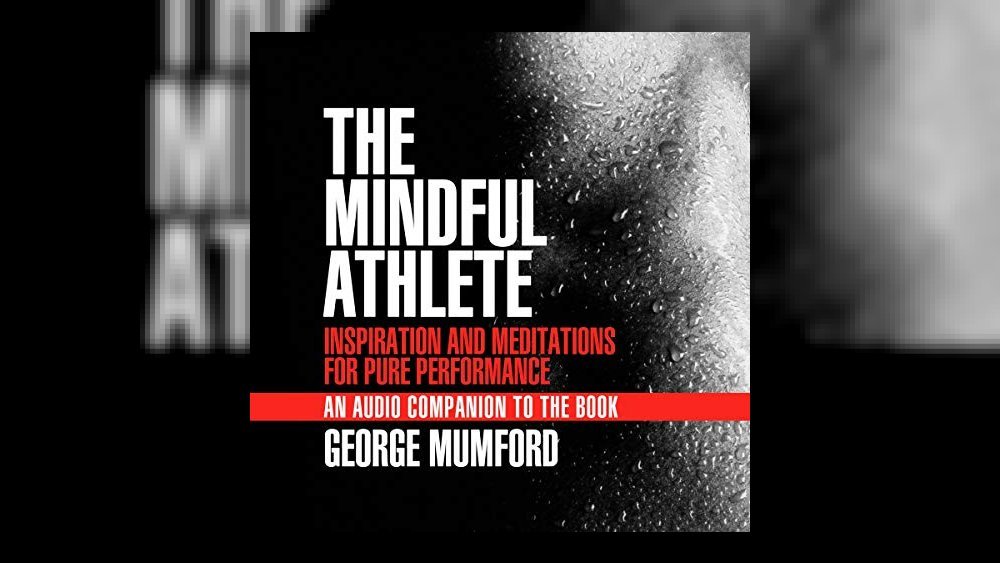
| The Mindful Athlete Audio Companion George Mumford | Anyone who wants an attention exercise they can use between deliveries | George Mumford | |
| The Art of Learning Josh Waitzkin | The batter whose practice has stopped making them better | Josh Waitzkin | |
| Mindset Carol S. Dweck | The player who treats a duck as a verdict on their ability | Bernadette Dunne | |
| The Champion’s Mind Jim Afremow | Players building confidence from preparation rather than waiting for it | Eric Michael Summerer | |
| The Fighter’s Mind Sam Sheridan | The one to read if you want the evidence, not the slogans | Nicholas Techosky |
The five books
The Mindful Athlete Audio Companion — the shortest and the most practical
George Mumford has worked with athletes most people in cricket have only heard of, and the argument of this book is simple: attention is trainable, and the training is unglamorous. There is very little theory in it and a great deal of exercise — noticing the drift, catching it earlier, and using short breathing resets between deliveries rather than between innings. Read by George Mumford · BetterListen. Listen on Audible
For a batter, the highest-value habit in here is the simplest one: pick one trigger — the moment you step into the crease, or the start of a new over — and attach a breath to it. Do it for a season and it becomes automatic.
The Art of Learning — how you learn is the thing that changes
Josh Waitzkin was a chess prodigy before he was a martial artist, and this is a book about the difference between how beginners and experts learn: how they read a position, how they treat mistakes as information rather than failure, and why the number of hours is less important than the quality of the attention inside them. Read by Josh Waitzkin · Tim Ferriss. Listen on Audible
The batting application is direct. The top players in this game are not the ones who spend longest at the nets; they are the ones who spent those hours noticing what actually happened. A book like this is worth more to a batter than a coaching manual, because it tells you how to run your own practice.
Mindset — the growth mindset, minus the slogans
Mindset is the book that put the phrase “growth mindset” into circulation, and it is more precise than the summaries suggest: the claim is not that anyone can achieve anything, but that the belief that ability is fixed changes how you respond to a bad day. Read by Bernadette Dunne. Read by Bernadette Dunne · Random House Audio. Listen on Audible
For a club batter the practical version is worth stating plainly: a duck is a data point, not a verdict on your ability. The player who treats a bad afternoon as evidence about their ability will defend; the player who treats it as evidence about their preparation will go and fix the preparation.
The Champion’s Mind — how champions actually think
Jim Afremow worked with some of the most successful teams in American sport, and the material here is drawn from those rooms. The core idea is that confidence is a by-product of preparation you can point at, not a mood you wait for. Read by Eric Michael Summerer. Read by Eric Michael Summerer · Tantor Audio. Listen on Audible
Two ideas from it are directly usable: know your three things (the three things you do when everything is going wrong), and rehearse the bad scenario rather than the good one. A batter who has already decided what to do after a first-ball duck has already won half of that innings.
The Fighter’s Mind — the best researched of the five
Sam Sheridan built this book on a decade of work with elite performers, and it is the one here with actual case studies attached to its claims. The pressure chapter is the part most club players should read twice: it separates the physical response (heart rate, hands, breath) from the meaning you attach to it, and shows that most of what gets called “choking” is the second one rather than the first. Read by Nicholas Techosky · Audible Studios. Listen on Audible
Turning listening into practice
Reading about mental skills is where most people stop, and it is why books like this produce nothing. The method that works is unglamorous: after finishing a chapter, write down one action. Not a feeling — an action, small enough to do at the crease. “Breathe out for two seconds before releasing the ball.” “Watch the bowler’s arm rather than the scoreboard.” “Say the next shot to yourself before you take guard.” Then take it into the next session and use it for a month before changing it.
Keep a note of what you use and what you drop. Most club batters find that two habits survive contact with a season and the rest fall away, which is fine — two habits that hold are worth more than ten you abandon in April.
What to listen to, and when
Long-form mental skills books want walking pace, not match speed. The obvious slot is the drive to the ground or a long session at work. In the week before a match, listen to the same book you have already read rather than starting something new: you want the material available in short form, not new material. And leave the earphones in your pocket during an innings, whatever the book recommends.
Common questions
Do mental skills books actually improve batting? Not on their own. They help if you convert them into a small number of repeated actions at the crease; they do nothing if they stay as ideas. Anyone promising a transformed game from listening alone is selling something.
Which of the five should I start with? The Mindful Athlete Audio Companion if you want something you can practise this week, The Fighter’s Mind if you want the evidence behind the advice, and The Art of Learning if the problem is that your practice has stopped making you better.
Is the growth mindset book worth the hype? The idea is sound and the book is better than its reputation. It is not a batting manual and it will not make you a better player on its own, but it does explain why some players improve after a bad month and others do not.
How do I stop choking in the middle innings? The chapter on pressure in The Fighter’s Mind is the most useful starting point, because it separates the physical response from the interpretation. Practically: a fixed breath pattern tied to a trigger, and a rehearsed plan for the delivery you will face next.
Can I listen while batting? No. Not for focus reasons and not for safety reasons — you need to hear the ball. Listen on the way there, and take one idea into the innings with you.
Written by the CricketGearGuru editorial team. Links above are affiliate links, which means we may earn a commission if you buy through them. It does not change the price, and it does not change the opinion.