Most club cricketers spend far more time thinking about their game than they spend training it. The shot that keeps missing, the over that unspins them, the two weeks after a bad Saturday. That mental half of the game is rarely coached, and it is rarely talked about, because there is no obvious place to start.
Audiobooks are one of the few places where it is genuinely addressed. There is now a serious shelf of it: an autobiography read by a professional actor, a spin bowler’s memoir recorded with the journalist who watched him for years, a chess prodigy’s account of learning under pressure, and a cluster of performance titles that make no cricket claims at all.
This guide compares the eight worth your time. Every entry below lists its narrator, its running time and who it actually suits, so you can pick one rather than queue up twelve and finish none. Nothing here depends on you being a good player. It depends on you being willing to spend ten minutes on the commute.
Listen to Cricket's Greatest for Free —
Keep your first audiobook forever.
Start a 30-day Audible trial and download biographies of Kohli, Warne, Tendulkar, or elite sports psychology books.
What these eight have in common
They are not self-help books with cricket words dropped in. Three are cricket books outright, two are memoirs by players who have since worked in the game, and three are performance books that happen to have nothing to do with sport but everything to do with how people learn. That mix is deliberate: the cricket books tell you what the top level is like, and the other three tell you how to build the habits that get you there.
Two details worth knowing before you start. First, none of them are long enough to be a project, but several are long enough that you will need a plan: Playing It My Way runs for over fourteen hours and No Spin for thirteen, so plan a season around them rather than a fortnight. Second, the narrators matter more than you would expect — a first-person audio is easier to listen to than a third-person summary of the same book, and the ones listed here use professional readers rather than the author.
The comparison
| Audiobook | Read by | Length | Best for |
|---|---|---|---|
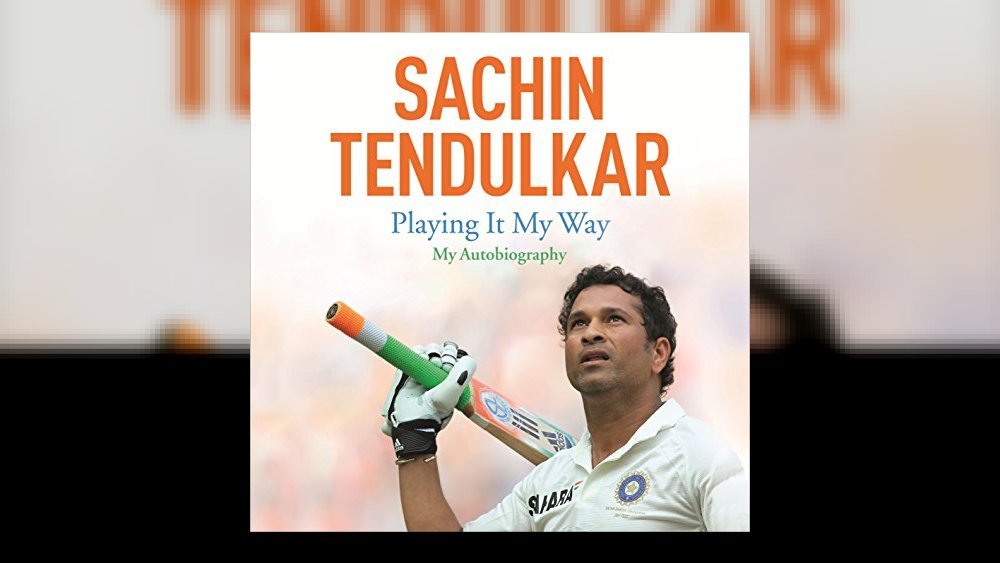
| Playing It My Way Sachin Tendulkar | Sartaj Garewal | 14 h 12 min | The player who wants to hear how a great player thinks, not just what he scored |
| No Spin Shane Warne with Mark Nicholas | Rhys Muldoon | 13 h 12 min | The spinner or the club player who wants the technical detail behind a great bowler |
| Bounce Matthew Syed | James Clamp | 7 h 48 min | The player stuck in the same net drill |
| The Art of Captaincy Mike Brearley with Ed Smith | Roger May | 13 h 54 min | The captain or the player who has just been given the responsibility |
| The Fighter's Mind Sam Sheridan | Nicholas Techosky | 8 h 54 min | The player whose problem is the first five overs |
| Mind Gym Sebastian Bailey with Octavius Black | Ralph Lister | 10 h 12 min | The beginner who wants the habits first, not the memoir |
| The Inner Game of Tennis W. Timothy Gallwey | Dan Woren | 4 h 36 min | The player who thinks too much between the wickets |
| Grit Angela Duckworth | Angela Duckworth | 9 h 24 min | The player who quits on a bad afternoon |
The eight worth your time
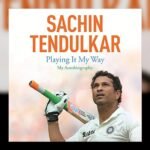
Playing It My Way — Sachin Tendulkar
It is the full autobiography of Tendulkar, read by the actor Sartaj Garewal rather than by Tendulkar himself, which changes the texture: you are listening to a performance of a life, not a lecture.
What you will actually take from it is the routine section. Tendulkar talks about how early he trained, how he handled being dropped, and how he read a bowler. None of that is instructional in the literal sense, but it is specific, and specificity is what most coaching content lacks.
Read by Sartaj Garewal · 14 h 12 min · Hodder & Stoughton, 2015. Listen on Audible
Fourteen hours is a long commitment for a book that is not really a reference. Start it in a season when you have a winter of drives and long train journeys ahead of you, and treat it as background rather than homework.
No Spin — Shane Warne with Mark Nicholas
Shane Warne with Mark Nicholas is an unusual pairing, because Nicholas is the journalist who spent years around Warne. That is why the audiobook works where the printed memoir can feel like an argument with an interviewer: the anecdotes sit next to the technical detail instead of being separated by it.
The bowling passages are the reason to listen. Warne explains spin in a way that a club player can use on a wet Sunday: grip, rev rate, the difference between a ball that is turning and a ball that is skidding, and what a batter feels when it is the second one.
Read by Rhys Muldoon · 13 h 12 min · Penguin Random House Audio, 2018. Listen on Audible
Thirteen hours, and the middle third is the most valuable. If your time is limited, start at chapter 12 and come back to the rest when the season starts.
Bounce — Matthew Syed
Matthew Syed was a leading world chess champion before he turned to performance work, and Bounce is about how talent is built rather than found. The famous example is the Williams father sending his children to watch Virginia Wade lose, so they could see what a defeat actually looks like.
For a cricketer the useful idea is simple and slightly uncomfortable: the amount of deliberate practice you do decides more than the amount of natural ability you were born with. That is a fair thing to hear in January and an uncomfortable one in August.
Read by James Clamp · 7 h 48 min · Harper, 2010. Listen on Audible
Seven hours and forty-eight minutes is the shortest commitment on this list, and Syed reads it himself, which keeps the pace brisk.
The Art of Captaincy — Mike Brearley with Ed Smith
Mike Brearley played 116 Tests for England and then captained them, and this is the book he wrote about the second job. Ed Smith, the former England captain, writes the introduction, and the two voices make it feel like a conversation rather than a manual.
The chapters on making decisions under pressure and on handling a team full of different characters are the ones club captains actually need. There is also a good section on what to do when you are winning badly, which is rarer and harder than it sounds.
Read by Roger May · 13 h 54 min · Macmillan Digital Audio, 2017. Listen on Audible
Almost fourteen hours, so this is a two-season book. It rewards patience.
The Fighter's Mind — Sam Sheridan
Sam Sheridan spent a decade working with elite performers across sports, and The Fighter's Mind is what that research turned into. He draws on boxers, golfers and cricketers to show that the mental skills that hold up under pressure are trainable, not personality traits.
The chapter on what to do in the ten minutes before a match is the most immediately usable part for a club player, because the problem is rarely the innings itself. It is the hour before it.
Read by Nicholas Techosky · 8 h 54 min · Audible Studios, 2015. Listen on Audible
Eight hours and fifty-four minutes, read by Nicholas Techosky, whose voice is unhurried enough that it works at walking pace.
Mind Gym — Sebastian Bailey with Octavius Black
Sebastian Bailey is a sports psychologist and a former county cricketer, and Mind Gym is the least glamorous and most useful book here. It is not about cricketers. It is about building a routine that survives a bad week, and it does that with clinical clarity.
Useful because it corrects a common mistake: most clubs try to fix a mental problem by adding more coaching. Bailey argues the opposite, that fewer instructions and more consistent preparation produce more reliable performance.
Read by Ralph Lister · 10 h 12 min · HarperOne, 2014. Listen on Audible
Ten hours is longer than it needs to be in places, but the structure is deliberate and easy to follow chapter by chapter.
The Inner Game of Tennis — W. Timothy Gallwey
Timothy Gallwey wrote this about tennis in 1974 and it is still the book most performance coaches have read. The argument is that the conscious mind is not very good at hitting a ball, and that most of the trouble we cause ourselves comes from trying to control the swing with instructions.
The transfer to cricket is direct. The chapters on self-talk, on imagery and on what to do when a shot is not working are standard cricket-coaching material now, and this is where it came from.
Read by Dan Woren · 4 h 36 min · Random House Audio, 2008. Listen on Audible
Just under five hours, so it is also the book you can finish in a fortnight if you are disciplined about it. Dan Woren reads it in a low, even register that suits the material.
Grit — Angela Duckworth
Angela Duckworth built her career on one idea, that passion and talent are not what separate the people who get better from the people who plateau. Grit is that idea expanded into a book, and she reads it herself.
The chapter on deliberate practice is the one to linger on, and the section on whether grit is something you can build is the one to argue with, because she is careful not to claim it is a free-standing virtue.
Read by Angela Duckworth · 9 h 24 min · Simon & Schuster Audio, 2016. Listen on Audible
Nine and a half hours. It is not a cricket book and it is not trying to be, which is precisely why it works.
How to fit listening into a club season
The failure mode with audiobooks is not choosing the wrong one. It is choosing eight and finishing none. Pick one, commit to it for a month, and let the others wait.
Match days. The long ones belong here. No Spin and Playing It My Way are almost tailor-made for a four-hour drive to a fixture, and both reward being heard rather than skimmed.
Commutes and chores. This is where the shorter ones live. The Inner Game of Tennis is under five hours, The Fighter’s Mind is under nine, and both work at the pace of a car journey. This is also where Mind Gym earns its place: it is a book you can pause and apply.
The off-season. Winter is when the long ones actually get finished, and when a new routine is easiest to install. If your January is quiet, start Mind Gym and use the spring to finish The Art of Captaincy.
Not on the field. Keep the earphones in your pocket during a match. The temptation to listen through a rain delay is exactly what the batting order tells you not to do.
What audiobooks will not fix
Being straight about this saves a lot of frustration. No audiobook will change your batface or make a spinners’ yorker land. The listening does three useful things and nothing else: it gives you a vocabulary for what you are feeling, it fills time you would otherwise spend on a feed that tells you nothing, and it hands you a repeatable routine for the boring parts of getting better.
Everything else still needs the unglamorous parts of the job. Your weight, your grip, your defence, your willingness to get back on after a bad session. If you are choosing between a new pair of gloves and an audiobook, the gloves win — but only if you would not have bought the book anyway.
Common questions
Are cricket audiobooks actually worth the time? For the mental side of the game, yes, with one condition: you have to treat them as input rather than entertainment, and pick something you can act on. A memoir you enjoy but never think about again changes very little. A habit book you follow for a month will.
Which one should a beginner start with? Mind Gym. It assumes no background, it is structured in short chapters, and it deals with the part of the game that beginners actually struggle with — holding a routine together when results are noisy. The Inner Game of Tennis is the other sensible entry point, and it is the shorter of the two.
Is an audiobook better than the printed book? For a long book, usually, because you can start it on a walk. For anything you need to look up — a drill, a chapter reference, a technique you want to re-read — the print version or the ebook is better. Ideally you have both.
How long before I notice something different? The honest answer is that the effect is not a single moment. The people who get value from this material use it as background thinking, and the compounding shows up over a season, not a week.
Can I listen while driving or walking? Yes, and that is the intended use. Just do not do it while you are batting, fielding, or driving to a match with a plan for the innings.
Want more of the same? The cricket knowledge hub collects the rest of our listening guides, and the Best Kashmir Willow Cricket Bats covers the other half of a club player’s kit.
Written by the CricketGearGuru editorial team. Some links above are affiliate links, which means we may earn a commission if you buy through them. It does not change the price, and it does not change what we think of the book.