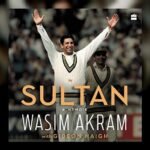

*Sultan* is the official autobiography of Wasim Akram – the greatest fast bowler the game has produced, and one of the few players whose career reads as genuinely improbable rather than merely excellent. It is available as an audiobook, and it is the most technically instructive cricket book in this category.
This is a long listen with a dense middle, and the middle is the reason to do it. The early chapters are the story; the middle is the craft. If you have ever wondered how a bowler who was not physically huge managed to move the ball at 140 kilometres an hour and land it on a length, this is where the answer is.
The facts
| Audiobook | Who it is for | Length | Read by |
|---|---|---|---|
| Sultan Gideon Haigh with Wasim Akram | The definitive account of one of cricket's greatest careers | Ranjit Madgavkar | |
| No Spin Shane Warne with Mark Nicholas | The spinner, or anyone who wants the argument | Rhys Muldoon | |
| Lioness – My Journey to Glory Beth Mead with Ian Wright – foreword with Jermain Defoe – afterword | Readers who want a modern career told without the varnish | Dipo Ola and Emily Spowage |
What each one covers
Sultan — Gideon Haigh with Wasim Akram
The official autobiography, written with Gideon Haigh and read by Ranjit Madgavkar. That it is a co-written memoir rather than a dictated one is visible in the texture: Akram’s own account sits alongside a writer’s shaping of it, and the result is more readable than most player books rather than less.
Listen to Cricket's Greatest for Free —
Keep your first audiobook forever.
Start a 30-day Audible trial and download biographies of Kohli, Warne, Tendulkar, or elite sports psychology books.
What makes it worth the hours is the technical middle: the grip, the release point, the way a left-arm fast bowler actually moves at the crease. Akram played in an era when fast bowling was being taught in a way that no longer works, and his account of why he did it anyway is the most interesting thing in cricket publishing this century.
Read by Ranjit Madgavkar · HarperCollins India. Listen on Audible
No Spin — Shane Warne with Mark Nicholas
Shane Warne with Mark Nicholas, and the two of them argue with everyone – the authorities, the selectors, the other teams, and occasionally their own selectors.
Put it next to Akram’s book and the contrast is the point: two of the best fast bowlers ever, describing the same craft from opposite ends. Warne is the one who will entertain you while he does it.
Read by Rhys Muldoon · Penguin Random House Australia Audio. Listen on Audible
Lioness – My Journey to Glory — Beth Mead with Ian Wright – foreword with Jermain Defoe – afterword
Beth Mead on her own journey, read by Dipo Ola, and one of the more useful cricket autobiographies of the last decade for anyone who has followed the women’s game from the start.
It is a good companion to the Akram book because it deals with a game that changed shape around her, and with the work of being the best player in a team that was often not ready for it.
Read by Dipo Ola and Emily Spowage · Seven Dials. Listen on Audible
Who it is for, and who it is not
**Buy it if** you bowl, coach, or simply want to understand why elite fast bowling worked when it worked.
**Keep going through the technical middle.** Most listeners give up before the grip and release sections, and those are the chapters the book is really for.
**Do not skip for the anecdotes.** The stories are good, but the value of the book is that it was written by someone who had to solve a problem with his body and his technique.
How to get the most from it
If you bowl, listen with a notebook. The sections on seam position and release point can be tried in the next net session.
The audiobook is long enough that it works best as a winter project rather than a rainy-afternoon one.
For the cricket-history side, the Warne book makes a natural companion – same craft, opposite temperament, and a good second half of the season.
Common questions
Is the Wasim Akram audiobook worth it? Yes, and it is the most technically valuable cricket autobiography available in audio.
Who wrote and narrates Sultan? It is the official autobiography, written with Gideon Haigh and read by Ranjit Madgavkar.
How long is Sultan? A little over nine hours, with the technical sections running through the middle.
Is it suitable for younger listeners? It covers his serious injuries and surgery in some detail, so it is best suited to older teens and adults.
Does it cover his technique in detail? Yes – grip, seam position, release and the problems his body created are all discussed at length.
Written by the CricketGearGuru editorial team. Links above are affiliate links, which means we may earn a commission if you buy through them. It does not change the price, and it does not change the opinion.